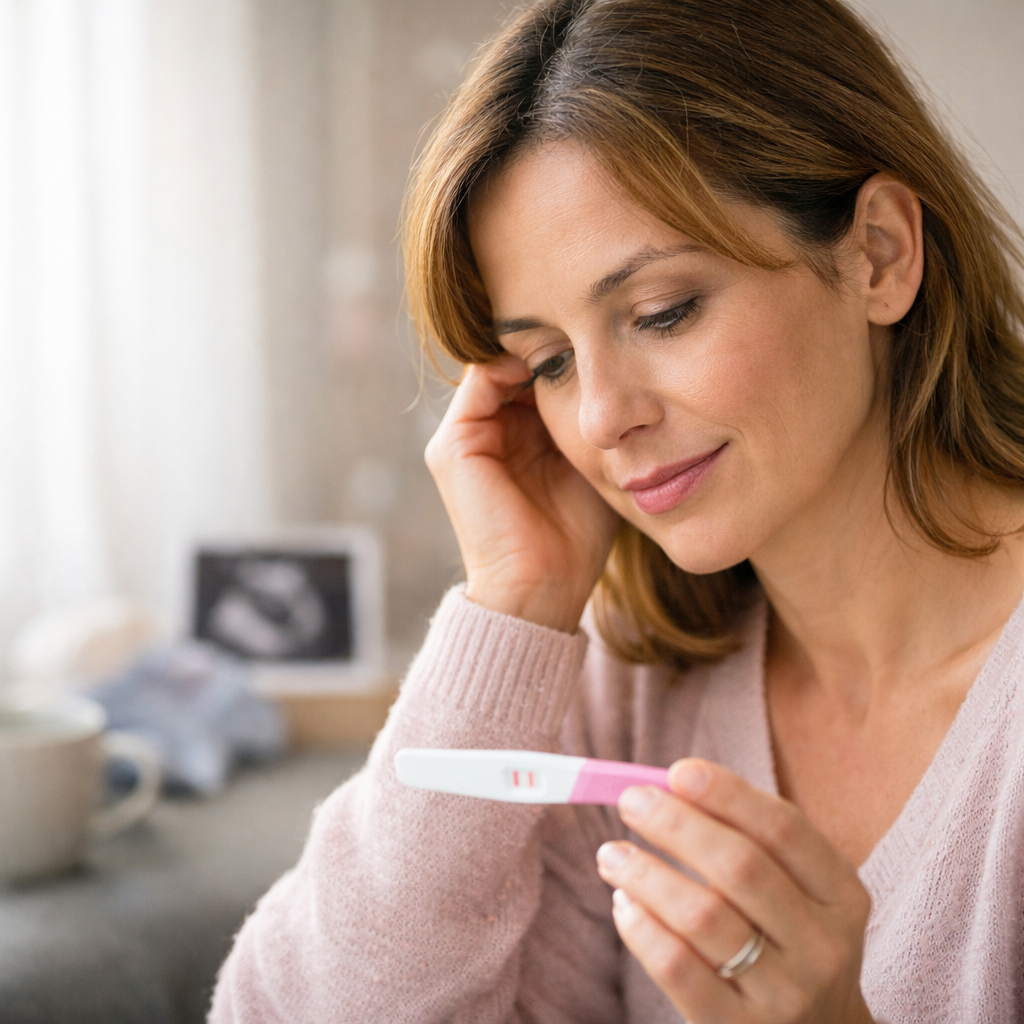
Irregular Cycles After 35: What Changes and When to Seek Support

If you’ve noticed that your menstrual cycle has become less predictable in your mid-to-late 30s, you’re not imagining it. Cycle variability is one of the earliest and most common signs of the hormonal changes that accompany the approach of perimenopause, and it can take many different forms — longer or shorter cycles, heavier or lighter … Ler mais

Night Sweats and Sleep After 35: Understanding the Hormonal Connection

Waking in the night drenched in sweat, heart racing, struggling to return to sleep — for many women in their mid-to-late 30s and beyond, this experience is both disruptive and disorienting. Night sweats are one of the most commonly reported symptoms among women approaching perimenopause, and they can have a significant impact on sleep quality, … Ler mais

Second Trimester Prenatal Screenings After 35: What to Expect

The second trimester is often described as the most comfortable phase of pregnancy — morning sickness has typically eased for many women, energy levels tend to improve, and the visible signs of pregnancy begin to emerge. But for women who conceived after 35, the second trimester also brings a distinctive set of prenatal screenings that … Ler mais

AMH Levels After 35: What the Research Tells Us About Ovarian Reserve

If you’ve been trying to conceive after 35 or have recently had fertility testing, you may have encountered a term that carries a surprising amount of emotional weight: AMH, or anti-Müllerian hormone. This marker has become one of the most commonly ordered tests in fertility workups, and for good reason — it offers a window … Ler mais