
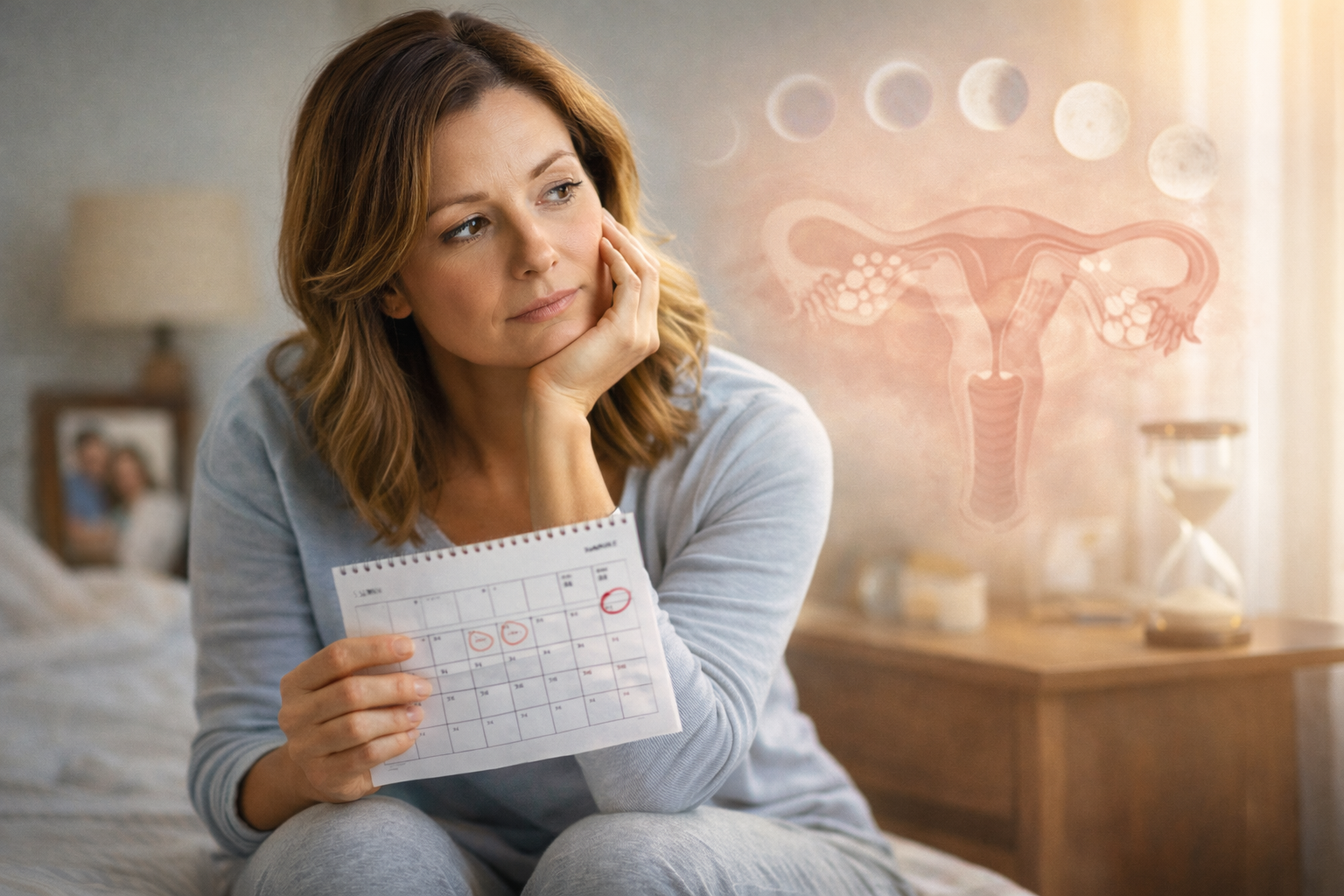
Quick answer: After 35, some women notice that their menstrual cycle becomes a little less predictable. A cycle may arrive a few days earlier or later, bleeding may feel heavier or lighter, PMS may shift, and ovulation signs may be harder to read. Many changes are related to normal hormone variation, stress, sleep, body weight changes, medications, or the early years leading toward perimenopause. But new, heavy, painful, very frequent, very long, or between-period bleeding should not be brushed off as “just age.”
This guide explains what can change in the menstrual cycle after 35, what is still considered a typical range, how to track patterns, and when to ask an OB/GYN or clinician for evaluation.
What This Does Not Mean
Cycle changes after 35 do not automatically mean menopause is starting, fertility is gone, or something is seriously wrong. Many women continue to have regular cycles and ovulate for years after 35.
At the same time, age should not be used as a reason to ignore symptoms. Abnormal bleeding can have many causes, including ovulation changes, pregnancy-related causes, thyroid issues, fibroids, polyps, endometriosis, adenomyosis, infection, medication effects, or changes related to perimenopause. The goal is not to panic. The goal is to notice patterns early enough to ask better questions.
What Is a Typical Menstrual Cycle?
A menstrual cycle is counted from the first day of one period to the first day of the next period. According to the Office on Women’s Health, a typical adult cycle usually falls between 24 and 38 days. ACOG also describes a normal menstrual period as generally lasting up to 8 days.
Variation from month to month can happen. A period that comes a few days earlier or later once in a while is not automatically abnormal. What matters more is the overall pattern: how often the change happens, whether bleeding becomes heavier or longer than usual, whether pain changes, and whether symptoms interfere with daily life.
Why Menstrual Cycles Can Change After 35
The menstrual cycle depends on communication between the brain, ovaries, and uterus. Hormones such as estrogen and progesterone rise and fall across the cycle. Ovulation timing, the uterine lining, and bleeding patterns all respond to that hormonal rhythm.
After 35, some women begin to notice more month-to-month variation. This can happen because ovulation may not occur at exactly the same time in every cycle, life stress may be higher, sleep may be less consistent, medications may change, and conditions such as thyroid disease, fibroids, polyps, PCOS, or endometriosis may become more noticeable.
For some women, especially later in the 40s, cycle changes may be part of the transition toward menopause. ACOG explains that during perimenopause, periods may become shorter or longer, bleeding may be heavier or lighter, and skipped periods may occur. But perimenopause is only one possible explanation.
Common Changes Women Notice After 35
Many cycle changes are subtle at first. A woman may notice that her period used to arrive every 28 days and now arrives every 25 to 31 days. Another may notice that the first day of bleeding is heavier than it used to be, or that premenstrual symptoms begin earlier in the cycle.
Commonly reported changes include:
- Cycles that become slightly shorter or slightly longer
- More variation in the number of days between periods
- Bleeding that feels heavier or lighter than before
- Periods that last more or fewer days than usual
- Spotting before the period starts
- More noticeable cramps, breast tenderness, headaches, mood changes, or fatigue
- Ovulation signs that feel less clear from month to month
One isolated unusual cycle can happen for many reasons. A repeated pattern is more useful information.
Cycle Patterns: What to Track and When to Ask
| Pattern | What it may suggest | What to track | When to ask a clinician |
|---|---|---|---|
| Cycle arrives a few days earlier or later | Normal variation, stress, sleep changes, travel, illness, or ovulation timing shifts | Cycle length for 2 to 3 months | If cycles are repeatedly shorter than 24 days, longer than 38 days, or worrying you |
| Heavier bleeding than usual | Hormonal variation, fibroids, polyps, adenomyosis, thyroid issues, medication effects, or other causes | Pad/tampon changes, clots, dizziness, fatigue, duration | If bleeding is heavy, lasts longer than usual, causes missed work, or soaks products quickly |
| Spotting between periods | Hormonal shifts, cervical or uterine causes, infection, pregnancy-related causes, or medication effects | Date, amount, color, sex, pain, pregnancy possibility | ACOG lists bleeding or spotting between periods as not normal |
| Bleeding after sex | Cervical irritation, infection, polyps, hormonal changes, or other causes | Timing, amount, pain, discharge, new symptoms | ACOG lists bleeding after sex as a reason to talk with an OB/GYN |
| Skipped period | Pregnancy, stress, weight change, thyroid issues, PCOS, perimenopause, or an anovulatory cycle | Pregnancy test result, cycle history, symptoms, medications | If you miss 90 days and are not pregnant or breastfeeding, ask a clinician |
| Bleeding after menopause | Needs evaluation | Date, amount, medications, prior history | Bleeding after 12 months without a period should be evaluated promptly |
Perimenopause and the Menstrual Cycle After 35
Perimenopause is the transition leading up to menopause. It usually becomes more common in the 40s, but symptoms and timing vary from person to person. Menopause is reached after 12 months in a row without a menstrual period.
During perimenopause, ovulation may become less predictable. Some months the ovaries may release an egg; other months they may not. This can lead to cycles that are shorter, longer, skipped, heavier, or lighter.
Symptoms that may appear alongside cycle changes include hot flashes, night sweats, sleep disruption, vaginal dryness, mood changes, and changes in PMS. If sleep changes are part of your pattern, see Female Sleep After 35 and Night Sweats After 35.
When Cycle Changes Are Not Just Perimenopause
Because menstrual changes can overlap with perimenopause, it is easy to assume every change is age-related. That assumption can miss treatable causes.
Possible contributors include:
- Pregnancy: A late or missed period after 35 still can be pregnancy. If pregnancy is possible, take a test.
- Thyroid changes: Thyroid problems can affect cycle regularity and bleeding.
- Fibroids or polyps: These can contribute to heavy, irregular, or between-period bleeding.
- Adenomyosis or endometriosis: These may contribute to painful or heavy periods.
- PCOS or ovulation problems: Irregular ovulation can lead to irregular or sometimes heavy bleeding.
- Medications and birth control: Hormonal contraception, emergency contraception, blood thinners, and other medications may affect bleeding.
- Infections or cervical changes: Bleeding after sex or unusual discharge should be discussed with a clinician.
If a change is persistent, sudden, heavy, painful, or unusual for you, it is worth asking about.
Menstrual Cycle Changes and Fertility After 35
Cycle tracking can help you understand ovulation timing, but it cannot measure egg quality or fully explain fertility. After 35, fertility can decline even when periods remain regular. That is why tracking should be used as one piece of information, not as the whole picture.
If you are trying to conceive, pay attention to cycle length, ovulation signs, cervical mucus, and whether periods are becoming irregular. You may also want to read Ovulation After 35 and Ovarian Reserve After 35 for more context.
Many clinicians recommend earlier fertility evaluation after 35 if pregnancy has not happened after about 6 months of trying, especially if cycles are irregular or there is a history of miscarriage, endometriosis, pelvic surgery, or known reproductive conditions.
How to Track Your Cycle for Better Answers
Tracking does not need to be complicated. A simple calendar, notes app, or period tracking app can work. The most useful information is consistent, specific, and easy to share during a visit.
Track for at least 2 to 3 cycles if the issue is not urgent. Include:
- First day of bleeding
- Last day of bleeding
- Cycle length from one period to the next
- Heaviest bleeding days
- Clots, flooding, or soaking through products
- Spotting before, after, or between periods
- Bleeding after sex
- Pain level and whether pain limits normal activities
- Sleep changes, night sweats, mood symptoms, or breast tenderness
- Pregnancy test results if relevant
This record can help your clinician decide whether reassurance, lab testing, ultrasound, medication changes, or another type of evaluation makes sense.
When to Contact an OB/GYN or Clinician
Ask for medical guidance if you notice any of the following:
- Bleeding or spotting between periods
- Bleeding or spotting after sex
- Heavy bleeding that is new for you
- Bleeding that lasts longer than usual or more than about a week
- Cycles repeatedly shorter than 24 days or longer than 38 days
- No period for 90 days when you are not pregnant or breastfeeding
- Severe pain or bleeding that causes you to miss work, school, or normal activities
- Dizziness, shortness of breath, chest pain, or symptoms of significant blood loss
- Any bleeding after menopause
Seek urgent care if bleeding is extremely heavy, you feel faint, or you have severe pain with possible pregnancy.
What Evaluation May Include
The right evaluation depends on age, symptoms, pregnancy possibility, medical history, medications, and risk factors. A clinician may ask about cycle history, bleeding amount, pain, sexual health, pregnancy possibility, contraception, medications, family history, and symptoms such as fatigue, weight changes, hot flashes, or pelvic pain.
Possible next steps may include a pregnancy test, blood count, thyroid testing, STI testing, pelvic exam, ultrasound, or other evaluation. In some cases, especially with abnormal bleeding or bleeding after menopause, clinicians may recommend endometrial sampling or other testing to check the lining of the uterus.
Questions to Ask at Your Appointment
- Is my cycle pattern still within a typical range?
- Which symptoms make this more concerning?
- Could this be related to ovulation, thyroid function, fibroids, polyps, medication, or perimenopause?
- Should I take a pregnancy test or have bloodwork?
- Would ultrasound or another test be useful?
- At what point should I come back if the pattern continues?
- If I am trying to conceive, should I seek fertility evaluation now?
FAQ
Is it normal for periods to change after 35?
Some variation can be normal. Cycles may become a little less predictable, and bleeding or symptoms may shift. But persistent, heavy, painful, between-period, post-sex, or postmenopausal bleeding should be discussed with a clinician.
Does a shorter cycle after 35 mean perimenopause?
Not necessarily. A shorter cycle can happen for several reasons, including normal variation, stress, ovulation timing, thyroid changes, or perimenopause. The pattern over time matters more than one cycle.
Can I still get pregnant if my cycle is changing?
Yes. If you are still having periods, pregnancy may still be possible. Cycle changes can make ovulation harder to predict, so tracking may help, but it does not replace fertility evaluation when needed.
When is irregular bleeding more urgent?
Bleeding after sex, bleeding between periods, very heavy bleeding, bleeding lasting longer than usual, severe pain, dizziness, or bleeding after menopause should be evaluated. If bleeding is very heavy or you feel faint, seek urgent care.
Should I use hormone tests to confirm perimenopause?
Perimenopause is often assessed by symptoms and menstrual pattern, not by one hormone test alone. Hormone levels can fluctuate. Ask your clinician what testing, if any, fits your symptoms and goals.
Medical Disclaimer
This article is for education only and is not a diagnosis or personal medical advice. If you have new, heavy, painful, unusual, or postmenopausal bleeding, contact an OB/GYN or qualified clinician. If bleeding is severe or you feel faint, seek urgent care.
About the Author
Her in Cycles creates evidence-informed educational content for women navigating fertility, pregnancy, menstrual health, sleep, and hormonal changes after 35. Articles are written for clarity, reviewed against reputable medical sources, and designed to help readers have better conversations with qualified clinicians.
3 comentários em “Menstrual Cycle After 35: Changes, Tracking, and When to Ask”
Os comentários estão encerrado.