\n Emily Carter

Sleep Apnea in Women After 35: A Frequently Overlooked Condition

Sleep Apnea in Women After 35: A Frequently Overlooked Condition

Sleep apnea — a condition in which breathing repeatedly stops and starts during sleep — is often discussed in the context of older, overweight men. However, research increasingly highlights that women are significantly underdiagnosed, and that the condition becomes more prevalent in women after menopause, with risk beginning to rise notably in the years approaching … Ler mais


Sleep Hygiene After 35: Evidence-Based Approaches to Better Rest

Sleep Hygiene After 35: Evidence-Based Approaches to Better Rest

The term “sleep hygiene” refers to the habits, behaviours, and environmental factors that can influence sleep quality. While it’s not a cure for serious sleep disorders, and results vary considerably among individuals, evidence suggests that certain consistent practices may support better sleep for many people — including women navigating the hormonal changes common after age … Ler mais

Mental Health During Pregnancy After 35: Navigating Anxiety and Emotional Changes

Mental Health During Pregnancy After 35: Navigating Anxiety and Emotional Changes

Mental health during pregnancy receives far less attention than physical health, yet the two are deeply interconnected. Research indicates that anxiety and depression during pregnancy are among the most common perinatal complications — affecting a significant proportion of pregnant women at all ages, including those who planned carefully, conceived after fertility treatment, and had every … Ler mais

Ovarian Reserve After 35: What Tests Measure and What Results Mean

Ovarian Reserve After 35: What Tests Measure and What Results Mean

Ovarian reserve — the quantity and quality of eggs remaining in the ovaries — is one of the most discussed topics in fertility medicine for women over 35. Yet it’s also one of the most commonly misunderstood. Many women encounter terms like “low ovarian reserve” or “diminished ovarian reserve” in clinical settings or online, often … Ler mais

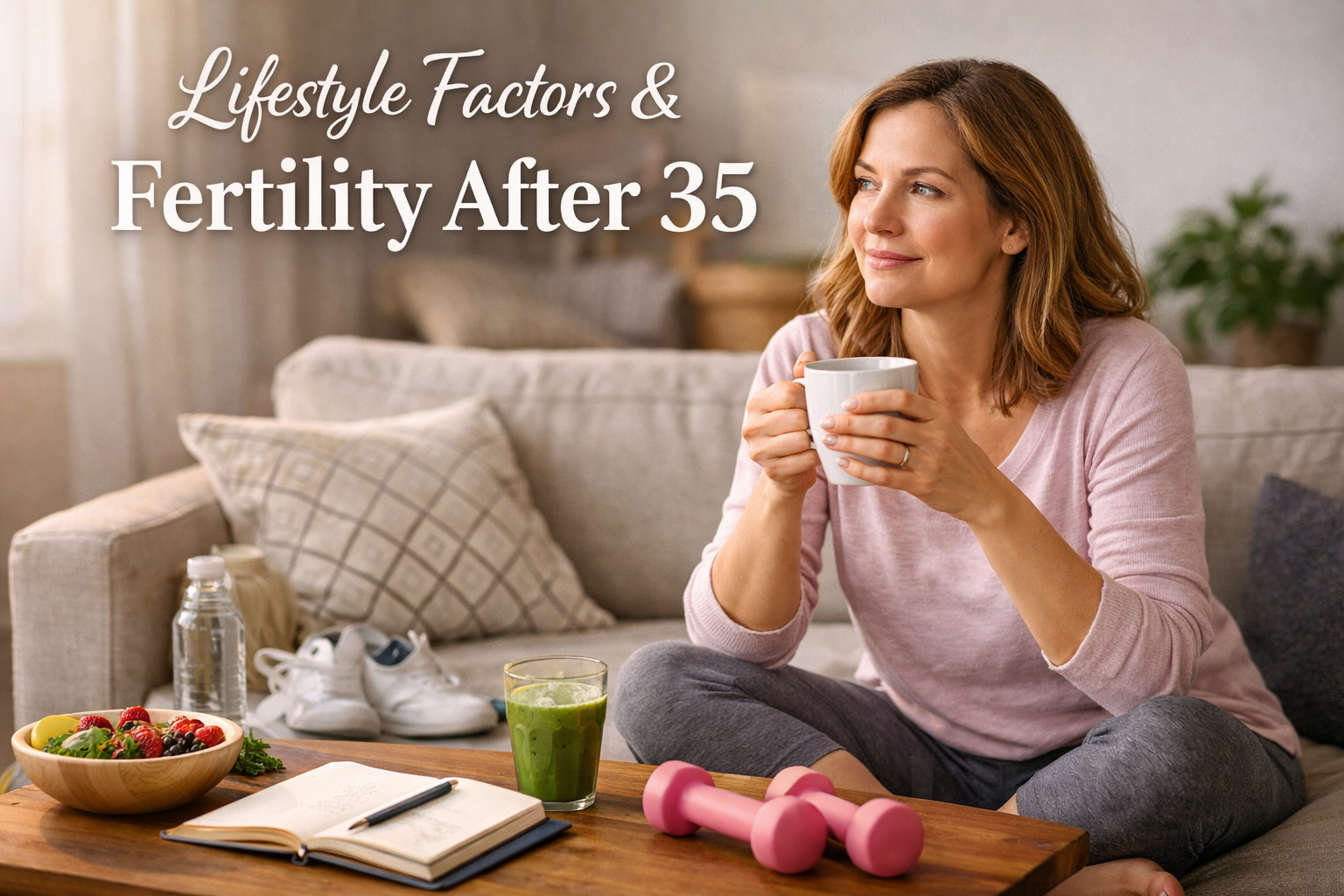
Lifestyle Changes That May Support Fertility After 35 — What the Research Actually Shows

lifestyle-factors-fertility-after-35/

Want to go deeper on this topic? See the Full Fertility Guide After 35 → If you’re over 35 and trying to conceive, you’ve probably been told to overhaul your diet, eliminate caffeine, manage stress, and take a handful of supplements — all at once. Some of that advice is grounded in evidence. A lot … Ler mais

Night Sweats After 35: Hormonal Changes and Their Effect on Sleep

Night Sweats After 35: Hormonal Changes and Their Effect on Sleep

Sleep during pregnancy becomes increasingly challenging as pregnancy progresses, and for women over 35, pre-existing age-related sleep changes compound pregnancy-induced disruption. Understanding why sleep is challenging, what’s normal, and strategies for improving sleep helps you navigate pregnancy rest more effectively. Why Sleep Changes During Pregnancy Research indicates that pregnancy affects sleep through multiple mechanisms: hormonal … Ler mais

Female Sleep During Perimenopause After 35: A Complete Guide

Female Sleep During Perimenopause After 35: A Complete Guide

Sleep becomes increasingly precious as we age, yet for many women in their late 30s and 40s, it often becomes more elusive. If you’re noticing that your sleep quality has shifted—that you’re waking at 3 a.m., struggling to fall asleep, or finding yourself drenched in night sweats—you’re not alone. What you may be experiencing is … Ler mais

Sleep Changes After Birth: What the Postpartum Period May Bring After 35

Sleep Changes After Birth: What the Postpartum Period May Bring After 35

Sleep after birth represents one of the most dramatic changes women experience. Newborns wake frequently for feeding and care, creating profound sleep disruption that affects physical health, emotional wellbeing, and cognitive function. Understanding what to expect—and strategies for managing sleep deprivation—helps you navigate the postpartum period more effectively. Sleep Architecture Changes After Birth Research indicates … Ler mais

How Anxiety and Stress Affect Sleep After 35: What Research Shows

How Anxiety and Stress Affect Sleep After 35: What Research Shows

The frustration of lying awake at 2 a.m., mind racing, unable to quiet your thoughts—this is a sleep disruption many women over 35 know intimately. While age itself isn’t inherently a cause of poor sleep, the intersection of aging, life responsibilities, and stress can create a perfect storm for sleep difficulties. Understanding how anxiety and … Ler mais