
Introduction
Sleeping well has always been important, but many women notice that after the age of 35, sleep starts to feel different. What once seemed to resolve itself with “one good night” now requires more attention. Difficulty falling asleep, waking up during the night, or feeling tired in the morning become more common — even when daily routines have not changed significantly.
These changes often bring frustration and self-blame. In most cases, however, they reflect natural adjustments in the female body at this stage of life. This article explains what usually changes in female sleep after 35, why it happens, and what is worth paying attention to, in a calm, informative, and non-medicalized way.
What female sleep is — and why it changes with age
Sleep is a complex biological process regulated by hormonal, neurological, emotional, and behavioral factors. In women, this system tends to be more sensitive to hormonal transitions throughout life.
After 35, even without clear signs of menopause, the body may begin to experience subtle hormonal fluctuations that influence sleep quality. At the same time, changes in routine, responsibility, and mental load often accumulate during this phase.
The result is not necessarily “worse sleep,” but rather sleep that is more sensitive to internal and external influences.
Female sleep across life stages: a broader perspective
Understanding what changes after 35 becomes easier when sleep is viewed as a process that evolves over time.
Sleep in the 20s
The body usually tolerates:
- Irregular schedules
- Occasional poor nights of sleep
- Intense nighttime stimulation
Recovery tends to be quicker, even with fewer hours of sleep.
Sleep in the 30s
Sleep increasingly reflects:
- Professional stress
- Emotional demands
- Accumulated responsibilities
Adaptation is still possible, but persistent fatigue may start to appear.
Sleep after 35
For many women, the body responds differently:
- Poor sleep has a stronger impact
- Sleep becomes lighter
- Rest depends more on consistency
This is not a rule, but a common pattern.
Common changes in female sleep after 35
Lighter, more fragmented sleep
Many women report that sleep feels less deep. Small noises, light, or thoughts can interrupt rest more easily.
Night awakenings
Waking up during the night — sometimes with difficulty falling back asleep — is one of the most frequent complaints at this stage.
Difficulty slowing down the mind
Even when physically tired, the mind may remain active, replaying tasks, worries, or plans for the next day.
Waking up feeling tired
Some women sleep for several hours but still wake up feeling unrested.
These changes vary widely from person to person and do not happen all at once.
The role of hormones in female sleep (educational approach)
Hormones play an important role in sleep regulation. After 35, natural hormonal fluctuations may influence this balance, even without clear clinical symptoms. For women who are also navigating fertility concerns, our article on lifestyle factors and fertility after 35 explores how sleep and hormonal health are connected.
In general:
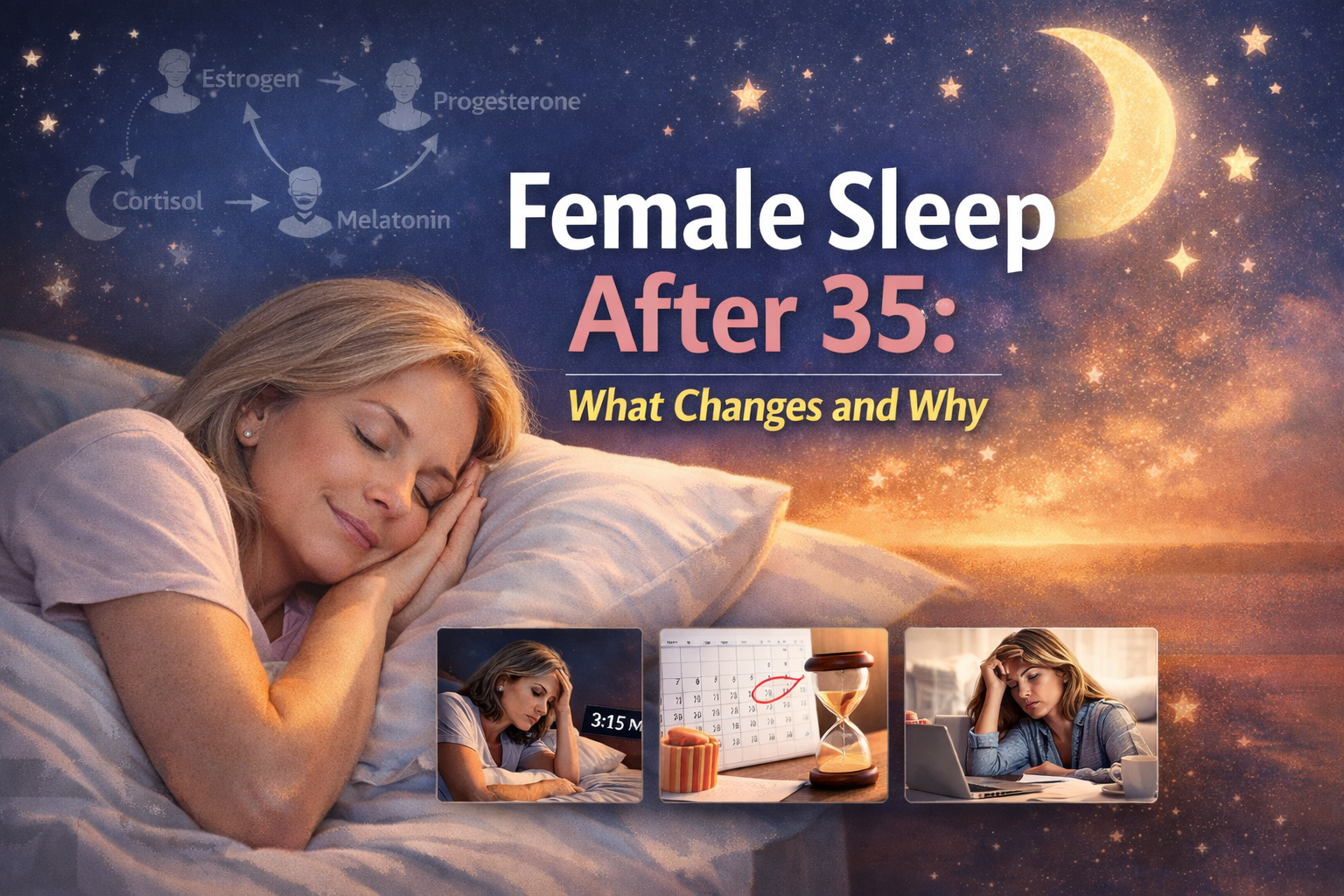
- Estrogen is often associated with sleep comfort and stability
- Progesterone is linked to relaxation
- Cortisol affects alertness
- Melatonin regulates the sleep–wake cycle
In some women, small shifts in these hormones may be associated with lighter or less stable sleep. This does not indicate illness, but rather increased sensitivity of the body.
Common signs many women tend to overlook
Some signals are often normalized in daily life, but deserve attention when they become frequent:
- Taking more than 30–40 minutes to fall asleep
- Waking up several times during the night
- Light, easily interrupted sleep
- Daytime sleepiness
- Irritability linked to fatigue
- A racing mind at bedtime
Observing these patterns can help identify personal trends without jumping to conclusions.
Factors that may influence sleep after 35
Stress and mental load
At this stage, many women juggle multiple roles. Even during rest, the mind may continue processing responsibilities and expectations.
Routine and social rhythm
Irregular schedules, late commitments, and limited time to unwind can directly affect sleep.
Screen use and stimulation
Phones, computers, and television at night may make it harder to transition into rest, especially when sleep is already more sensitive.
Menstrual cycle phases
Some women notice that sleep quality varies across the menstrual cycle.
Sleep environment
Light, noise, temperature, and comfort tend to matter more than before.
What generally helps (without medicalization)
Without discussing treatments or protocols, some general approaches are often associated with better sleep perception:
- More consistent bed and wake times
- A clear transition from active hours to nighttime
- Reduced mental stimulation in the evening
- Awareness of how caffeine, alcohol, and late meals affect sleep
- Respecting physical and mental limits
These are not strict rules, but invitations to observe and adjust gradually.
Expectations, performance, and female sleep
An often overlooked factor is the link between sleep and self-imposed pressure. Many women maintain high performance expectations even when the body signals fatigue.
Poor sleep is not a personal failure. In many cases, it reflects the pace and demands placed on the body throughout the day. Recognizing this can reduce emotional pressure around sleep.
When to seek professional guidance
It may be helpful to seek guidance if:
- Sleep difficulties persist for several weeks
- Fatigue begins to affect mood, work, or relationships
- Night awakenings are frequent and prolonged
- Poor sleep is accompanied by other physical or emotional symptoms
A qualified professional can help contextualize these changes and offer individualized support.
Frequently Asked Questions About Sleep After 35
Why do I keep waking up at 3am in my 30s?
Middle-of-the-night waking is one of the most common complaints in women after 35. It’s often linked to shifts in progesterone (which promotes deeper sleep), cortisol patterns, and naturally lighter sleep architecture that comes with age. Stress and mental load also play a significant role — even when you don’t feel acutely anxious.
Why am I so exhausted in my mid-30s as a woman?
Persistent tiredness at this stage usually reflects a combination of lighter, more fragmented sleep; hormonal shifts affecting how restorative sleep feels; higher cognitive load from work and life; and sometimes nutritional gaps like low iron. It’s rarely one cause alone, and worth discussing with a provider if it’s affecting daily life.
Can hormones cause insomnia in women over 35?
Yes. Progesterone has mild sedative properties, so when levels fluctuate across the menstrual cycle, sleep can feel less consistent. Estrogen also influences thermoregulation, which affects how easily you fall — and stay — asleep. These changes are physiological, not just stress.
Why does sleep get worse after 35?
Sleep architecture naturally becomes lighter with age, hormonal fluctuations increase, and life demands often peak in this decade. None of this is inevitable or permanent, but sleep after 35 typically requires more intentional support than it did at 25.
Is it normal for sleep to change after 35?
Very common, yes. Research consistently shows women report more sleep disturbances in their mid-30s and 40s. Hormonal, psychological, and lifestyle factors all contribute.
Is menopause the only cause of sleep changes after 35?
No. Hormonal shifts, stress, lifestyle changes, and natural changes in sleep depth can all affect sleep quality well before menopause. Many women in their mid-30s notice changes with no perimenopausal symptoms at all.
Can stress affect sleep even without obvious anxiety?
Absolutely. Accumulated mental load — the cognitive weight of managing multiple responsibilities — can keep the nervous system in a low-level alert state that disrupts sleep, even when you don’t feel overtly stressed. This is one of the most underrecognized sleep disruptors for women in their 30s.
Internal link suggestions
- Pillar: Getting pregnant after 35: what every woman should know
- Related: Female sleep after 35: complete guide
- Related: Insomnia in women after 35
- Related: Sleep hygiene after 35
Medical disclaimer
This content is for informational purposes only and does not replace professional medical advice. Each person may respond differently, and a qualified health professional can help assess individual situations.
Related Reading: How the Body Responds to Stress | Body Changes After 35
Sources: Mayo Clinic – Female Fertility: Why Lifestyle Choices Count
5 comentários em “Why Women Sleep Differently After 35 — And What Actually Helps”
Os comentários estão encerrado.