
Introduction
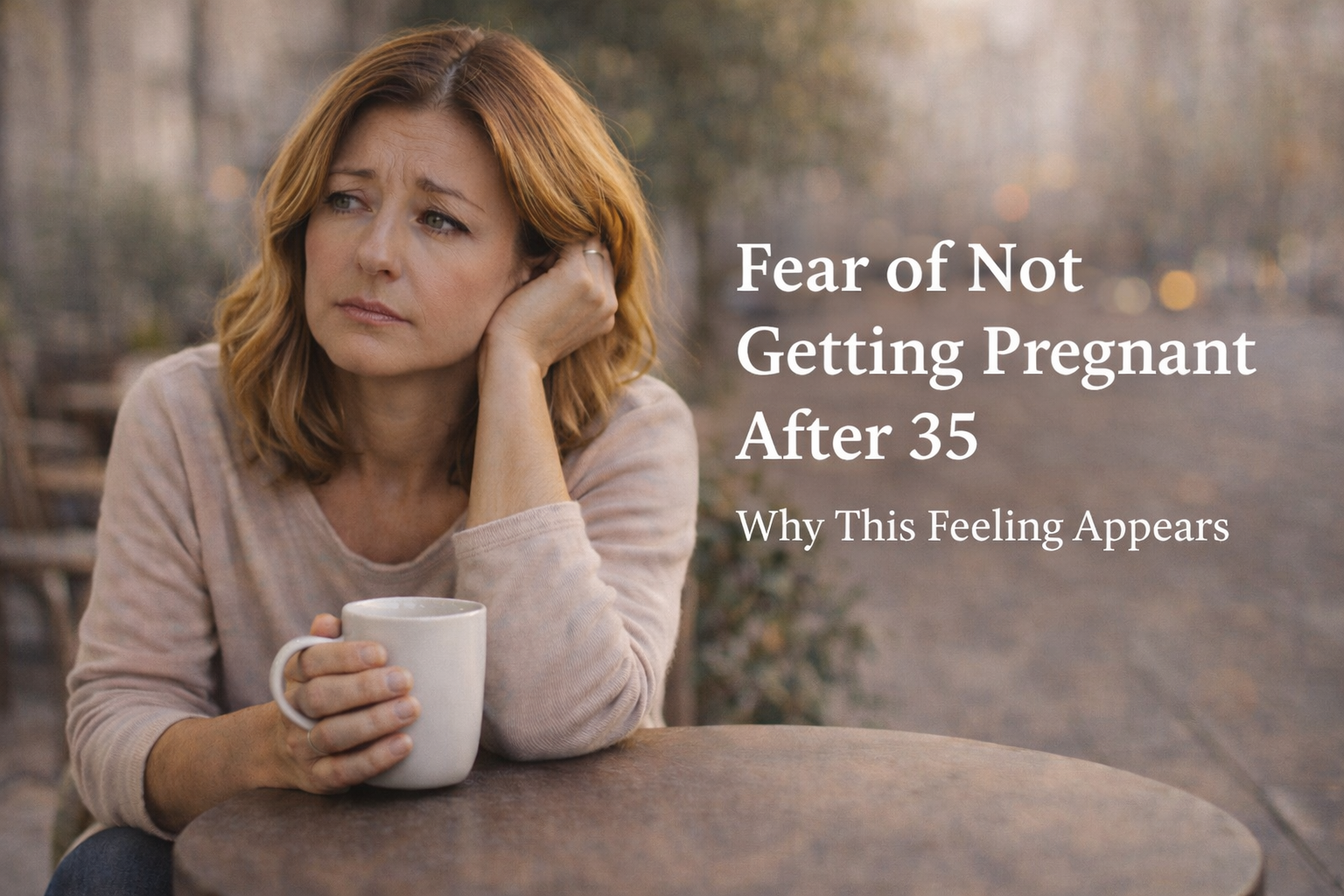
The fear of not getting pregnant after 35 is often quiet, yet deeply present. It may not always be spoken aloud, but it tends to live in recurring thoughts, subtle comparisons, and moments of insecurity — even when everything seems to be “on track.”
For many women, this fear does not arrive suddenly. Instead, it slowly takes shape at the intersection of desire, expectation, and uncertainty. Wanting something deeply meaningful while knowing that not everything is within one’s control can create an emotional tension that is hard to name.
Importantly, feeling afraid does not mean lacking hope. On the contrary, this fear often reflects how significant the desire for motherhood is. Understanding where this feeling comes from helps reduce self-judgment and opens space for a more compassionate relationship with oneself during this phase.
Why the Fear of Not Getting Pregnant May Appear After 35
After the age of 35, many women begin to experience time differently. There is often greater awareness of the body, of past choices, and of future possibilities. As a result, thoughts about fertility and motherhood may become more emotionally charged.
Several elements can contribute to the appearance of this fear, including:
Greater awareness of time passing
While fertility does not follow a strict deadline, increased awareness of age can make time feel more present and pressing.
Conflicting information about fertility
Statistics, headlines, and fragmented advice may create confusion rather than clarity, feeding uncertainty.
Comparison with other women’s stories
Hearing about quick pregnancies or different life paths can unintentionally intensify fear.
Internal pressure for pregnancy to happen soon
The idea that “there may not be much room to wait” can increase emotional urgency.
Uncertainty about how the body is responding
Not having immediate answers often leaves space for fear to grow.
Taken together, these factors do not create fear on their own. However, they help explain why this feeling may become more noticeable after 35.
How This Fear Commonly Shows Up in Daily Life
Although fear can feel abstract, it often appears through everyday emotional responses. Many women describe experiencing it in subtle but persistent ways, such as:
- Recurrent thoughts about future scenarios
- A sense of urgency around timing and decisions
- Sadness or discomfort when hearing pregnancy announcements
- Difficulty relaxing during the trying-to-conceive phase
- Frequent comparison with other women’s journeys
- Feelings of guilt related to past choices
These reactions are not signs of emotional weakness. Rather, they are deeply human responses to caring about something that matters.
Emotional Factors That Can Intensify This Fear
Several emotional elements tend to shape how strongly this fear is felt. Most of the time, they interact rather than act alone.
Expectation
When motherhood is strongly desired, each cycle or passing month may carry additional emotional weight. Consequently, fear may grow alongside hope.
Comparison
Even when comparisons are unintentional, hearing about other women’s experiences — often without full context — can increase feelings of inadequacy or being “behind.”
Emotional silence
Many women go through this fear quietly. Without a safe space to talk about it, thoughts may loop internally, becoming heavier over time.
Self-pressure
Thoughts such as “I should have tried earlier” or “I waited too long” may generate guilt and emotional tension.
Uncertainty
Because pregnancy does not depend solely on effort or planning, the lack of control can amplify fear.
Recognizing these emotional layers helps normalize the experience and reduces the tendency to blame oneself.
Fear Does Not Mean Something Is Wrong
One of the most important things to understand is that fear does not predict outcomes. Feeling afraid does not mean pregnancy will not happen, nor does it reflect emotional unpreparedness.
In many cases, fear is connected to:
- Desire
- Responsibility
- Awareness
- Care for the future
When something carries meaning, emotions naturally intensify. Therefore, fear can be seen not as a failure, but as a sign of emotional involvement.
Information: Comfort or Emotional Overload?
Information can be both supportive and overwhelming. On one hand, learning about fertility and cycles may create a sense of participation and understanding. On the other hand, too much information — especially when conflicting — may increase anxiety and fear.
Constantly interpreting signs, symptoms, and timelines can turn the process into an emotional burden. For this reason, choosing clear, realistic, and non-alarmist sources often helps keep fear from growing unnecessarily.
What Often Helps in a General Sense
Without promising to eliminate fear entirely, some attitudes commonly help women relate to it more gently:
- Acknowledging fear without judgment
- Understanding that this feeling is common
- Reducing constant comparison
- Seeking balanced and realistic information
- Sharing emotions with someone trustworthy
Although these practices do not remove fear, they often make it feel less overwhelming.
When Emotional Support May Be Helpful
At times, fear becomes heavier and more persistent. Seeking support in these moments is not a sign of weakness, but of self-care.
It may be helpful to seek emotional support when:
- Fear feels constant or paralyzing
- Thoughts about not getting pregnant dominate daily life
- Emotional distress interferes with routine or relationships
- Feelings of guilt, sadness, or inadequacy persist
Professional support can offer a safe space to explore these emotions with care and clarity.
Frequently Asked Questions
Is it normal to fear not getting pregnant after 35?
Yes. This fear is common and closely linked to desire and uncertainty.
Does having this fear mean pregnancy will not happen?
No. Emotions do not determine outcomes.
Can this fear appear even before actively trying?
Yes. For many women, it begins during the reflection phase.
Does comparison increase this fear?
For many women, comparison intensifies insecurity.
Does talking about this fear help?
Yes. Sharing emotions often reduces their intensity.
Final Summary
- Fear of not getting pregnant after 35 is common
- It often arises from desire combined with uncertainty
- It is not a sign of emotional weakness
- Comparison and self-pressure may intensify it
- Compassion, information, and support help navigate this phase
Optimized Internal Links
- Pillar: Trying to conceive after 35: what to observe
- Related: Anxiety when trying to conceive: why it appears
- Related: Age and female fertility: what changes over time
Disclaimer
This content is informational and emotionally supportive. It does not replace psychological care or professional guidance when needed. Emotional experiences vary, and seeking support is a valid and healthy form of self-care.
Related Reading: Anxiety When Trying to Conceive | Biological Clock Pressure
Sources: Mayo Clinic – Female Fertility: Why Lifestyle Choices Count