
Introduction
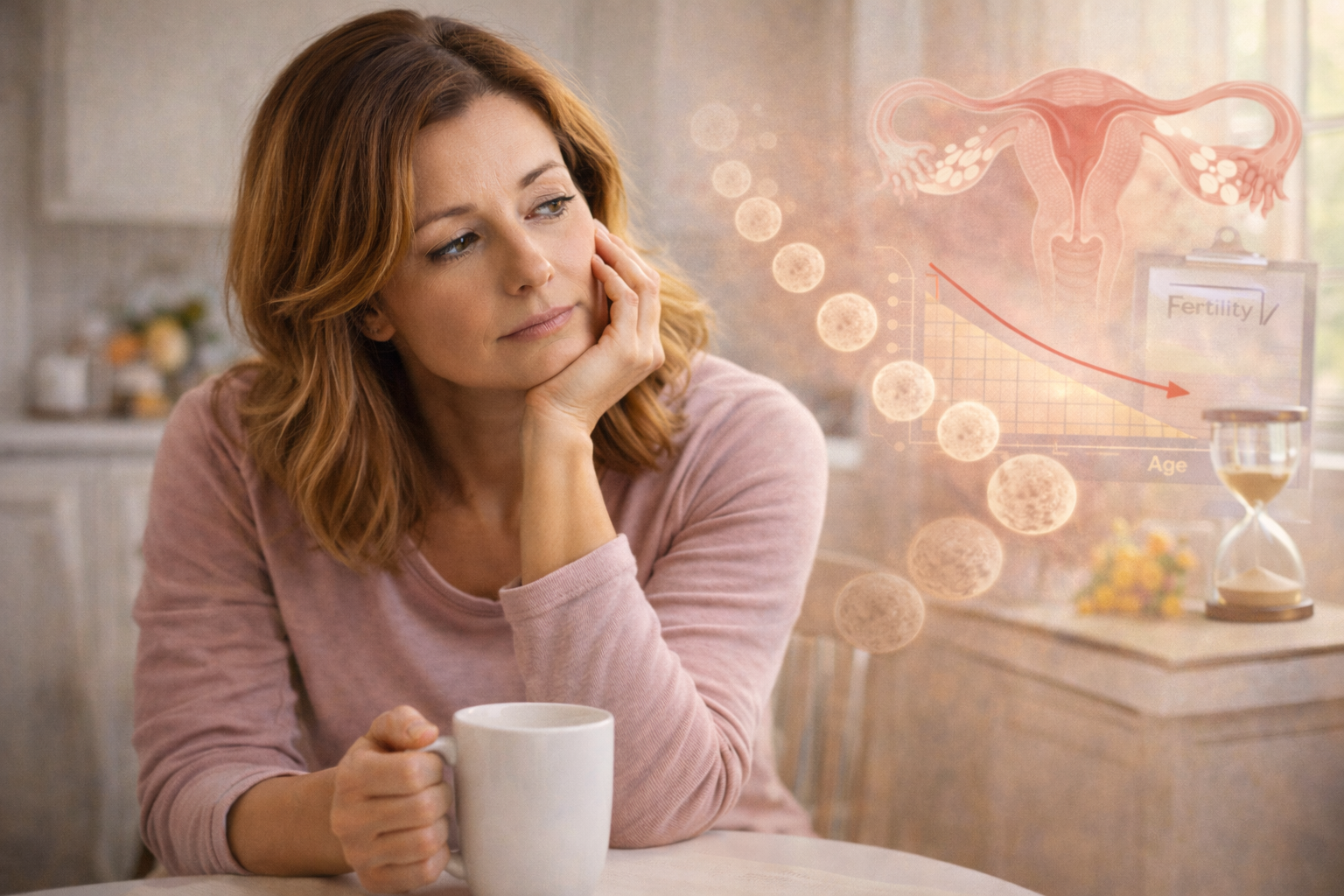
Talking about age and female fertility often brings up mixed feelings. For many women, curiosity and reflection come first. At the same time, quiet concern may appear — especially between the ages of 35 and 50. Whether there is a desire to become pregnant or simply a wish to better understand one’s body, this topic naturally becomes more present over time.
As life progresses, fertility does not suddenly change from one year to the next. Instead, it evolves gradually, influenced not only by age, but also by routine, emotional context, and personal history. Because of that, understanding these changes can help replace pressure with perspective and uncertainty with clarity.
Rather than focusing on deadlines, this article aims to explain what tends to shift over time and how to relate to those changes with more calm and confidence.
What Female Fertility Is and How It Works
Female fertility is often explained in simple terms. However, in practice, it reflects a delicate balance. It involves ovulation, hormonal communication, cycle regularity, and the body’s ability to support a pregnancy.
In other words, fertility does not depend on a single event. Instead, it emerges from how multiple systems work together over time. For this reason, fertility can look different from one person to another — and even feel different at various stages of life.
As the body matures, this balance naturally adapts. Importantly, these adaptations are not flaws or failures. Rather, they are part of how the body responds to time and experience.
Why Fertility Changes Over Time
As the years pass, it is normal for the reproductive system to change gradually. For many women, these changes become more noticeable after the age of 35. Still, the timing and intensity of these shifts vary widely.
One reason fertility changes is that the number of available eggs slowly decreases over time. Additionally, the ovaries’ response to hormonal signals may become less predictable from month to month.
Even so, these changes do not follow a fixed schedule. In fact, age alone does not define fertility. Genetics, overall health, and personal history all play an important role.
Common Changes Women May Notice
Over time, some experiences tend to appear more often, although none of them are universal:
- For example, a gradual reduction in the number of eggs available
- In some cases, menstrual cycles that vary slightly more than before
- At times, ovulation that feels less predictable
- Compared to earlier life stages, taking longer to conceive
- More noticeably, greater awareness of different phases of the menstrual cycle
However, noticing one or more of these changes does not automatically mean something is wrong. In many cases, they simply reflect the body’s natural rhythm.
Fertility After 35: A Different Kind of Awareness
After 35, many women report becoming more attentive to their bodies. Previously, cycles may have felt automatic. Now, they often invite closer observation.
On one hand, this increased awareness can feel empowering. On the other hand, it may bring new questions. Comparing the present to earlier experiences is common and understandable. Nevertheless, fertility does not follow a straight line.
Therefore, taking more time to conceive or noticing cycle changes does not automatically signal a problem. Often, it reflects normal variation combined with greater self-awareness.
Factors That Influence Fertility Beyond Age
While age plays a role, fertility is shaped by many interconnected factors:
Biological age
Over time, ovarian reserve and egg quality tend to change. However, the pace of these changes differs for each woman.
Lifestyle and routine
Daily habits, physical activity, nutrition, and routine stability all influence how the body functions.
Stress and emotional load
In addition, busy schedules, work demands, and emotional responsibilities can affect hormonal balance and how cycles are experienced.
Sleep quality
Likewise, consistent rest supports balance, whereas chronic fatigue may intensify perceived changes.
Reproductive history
Finally, past pregnancies, contraceptive use, and previous experiences also shape individual context.
Taken together, fertility is rarely influenced by one factor alone.
The Emotional Side of Fertility and Age
Beyond physical changes, fertility also carries emotional meaning. Especially between 35 and 50, this topic often intersects with career decisions, relationships, and personal expectations.
As a result, comparisons with others or with one’s past can increase pressure. Still, feeling uncertain does not indicate weakness. Rather, it reflects awareness and care.
By acknowledging this emotional dimension, many women find it easier to approach fertility with less self-judgment and more balance.
What Often Helps During This Phase
Although there are no guarantees, many women find it helpful to:
- First, seek clear and trustworthy information
- Then, observe their cycle over time rather than focusing on a single month
- At the same time, reduce comparisons with others’ stories
- Equally important, care for emotional well-being
- Above all, relate to the body with patience and kindness
While these approaches do not promise outcomes, they often reduce anxiety and support clarity.
When Professional Guidance May Be Helpful
In some situations, professional guidance may be worth considering. For example, when:
- Attempts to conceive have continued for a long time
- Menstrual cycles change suddenly or significantly
- Questions about fertility become persistent
- Anxiety begins to affect daily life
In these cases, a professional conversation can help place experiences in context and provide reassurance tailored to individual needs.
FAQ
Does fertility change the same way for everyone?
No. In fact, each woman’s experience is unique.
Is pregnancy impossible after 35?
No. On the contrary, many women conceive naturally after 35.
Does age affect only egg quantity?
No. Additionally, other aspects of the cycle and body function may change.
Do lifestyle and routine matter?
Yes. Because of this, sleep, stress, and habits play an important role.
Does taking longer to conceive mean infertility?
Not necessarily. Time alone does not define fertility.
Can learning more help emotionally?
Yes. In most cases, understanding reduces fear and unrealistic expectations.
Final Summary
- Overall, female fertility changes gradually over time
- After 35, these changes may feel more noticeable
- However, not every change indicates a problem
- Instead, age interacts with lifestyle and emotional well-being
- Ultimately, information helps approach fertility with calm and confidence
Suggested Internal Links
- Pillar: Trying to conceive after 35: what to observe
- Related: Why getting pregnant after 35 may take longer
- Related: Ovulation after 35: what to observe
Medical Disclaimer
This content is for informational purposes only and does not replace guidance from healthcare professionals. Each person may respond differently, and a qualified professional can help evaluate individual situations.
Related Reading: Ovulation After 35 | Menstrual Cycle After 35
Sources: Mayo Clinic – Female Fertility: Why Lifestyle Choices Count
4 comentários em “Age and Female Fertility: What Changes Over Time”
Os comentários estão encerrado.