
Introduction
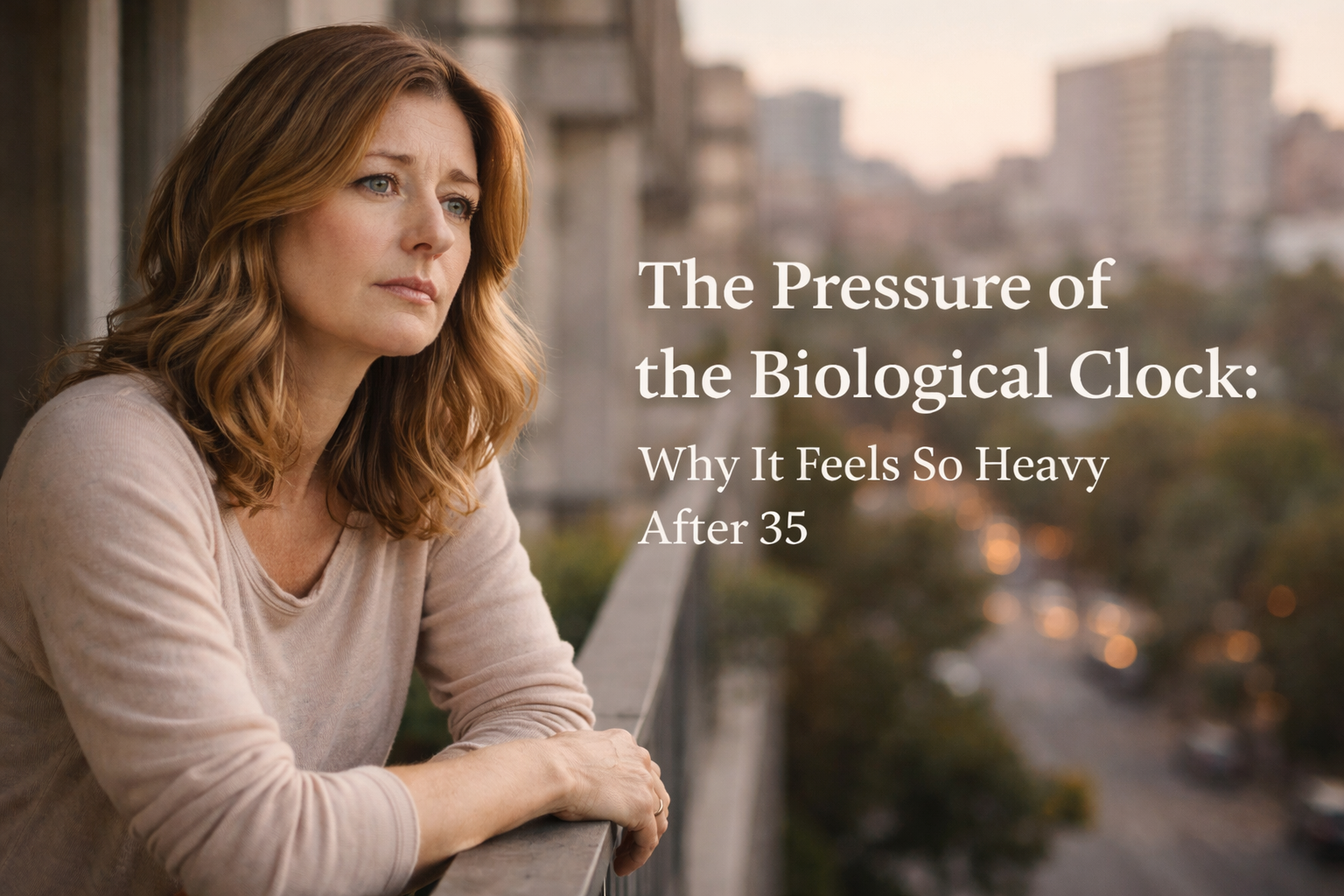
The expression “biological clock” often comes loaded with urgency, fear, and expectation. For many women after the age of 35, it is no longer just an abstract concept, but rather a quiet pressure that seeps into thoughts, decisions, and emotions.
This pressure does not come only from the body. Instead, it is also shaped by social expectations, comparisons, and messages repeated throughout life. As a result, the sense of time can start to feel heavier and more charged.
Understanding where this pressure comes from helps reduce its emotional weight. More importantly, it creates space to relate to the idea of time with greater awareness and less self-judgment.
What Is Commonly Called the “Female Biological Clock”
The term “biological clock” is usually used to describe the natural changes in fertility that occur over time. From a biological perspective, the body goes through gradual transformations as age advances.
However, the pressure of the biological clock goes far beyond biology. It also involves how time is perceived, how age is interpreted, and how motherhood is symbolically placed within certain life stages.
For many women, what feels most overwhelming is not only how the body functions, but the sense that there is a socially imposed deadline — even when personal circumstances do not fit into that timeline.
Why This Pressure Often Increases After 35
After 35, several factors tend to converge, making the pressure of the biological clock feel more intense.
First, there is usually a greater awareness of time. Age becomes more present in conversations, medical forms, and casual comments.
In addition, information about fertility and age becomes more frequent. While information can be helpful, it can also be fragmented or presented without context, reinforcing anxiety.
Moreover, comparison with different life trajectories often intensifies. Seeing friends, colleagues, or public figures experiencing motherhood at different times may trigger feelings of being “late” or “out of sync.”
At the same time, family or social expectations may become more explicit, adding external pressure to internal reflection.
As a result, decisions that once felt open-ended may begin to feel urgent, even when there is no immediate need to rush.
How This Pressure Commonly Manifests
The pressure of the biological clock can appear in subtle or more noticeable ways. Many women report experiences such as:
- A constant sense of urgency
- Difficulty making decisions calmly
- Recurring thoughts about being “behind”
- Guilt for not having tried earlier
- Anxiety when hearing pregnancy stories
- Trouble fully enjoying the present moment
These reactions do not indicate emotional weakness. Instead, they reflect the symbolic weight placed on female reproductive time.
Emotional and Social Factors That Shape This Experience
Several elements influence how this pressure is felt, often acting together rather than independently.
Social Narratives
The idea of a “right age” for pregnancy is still deeply rooted in many cultures. Consequently, women who follow different timelines may feel the need to justify or explain their choices.
Comparison
Stories of other women’s journeys — especially when simplified — can reinforce the sensation of delay or inadequacy. However, these comparisons rarely capture the complexity behind each path.
Personal Trajectory
Career decisions, relationships, health, and life circumstances form unique stories. When these paths are evaluated through rigid timelines, emotional tension often increases.
Lack of Open Dialogue
There is still little open conversation about diverse paths to motherhood. This silence can intensify feelings of isolation.
Self-Pressure
Women often internalize responsibility for timing decisions, even when those decisions were made thoughtfully and within real-life constraints.
When Desire Turns Into Pressure
Desire for motherhood, by itself, does not create pressure. However, when desire meets urgency, comparison, and fear, emotional tension can grow.
At this point, thoughts about motherhood may start to feel less like an invitation and more like an obligation. Consequently, joy and curiosity may give way to stress and self-criticism.
Recognizing this shift is important. It allows desire to be reclaimed as something personal, rather than something driven by external timelines.
The Difference Between Biological Reality and Emotional Pressure
It is important to distinguish between biological information and emotional interpretation.
While fertility does change over time, the emotional weight assigned to those changes is often shaped by social narratives. Feeling pressured does not automatically reflect actual possibilities or outcomes.
In other words, the feeling of being “out of time” is not the same as being out of options.
What Often Helps in a General Sense
Without promising to eliminate the pressure entirely, some attitudes often help women relate to it more consciously:
- Acknowledging that the pressure is real and shared
- Questioning rigid narratives about age and motherhood
- Reducing constant comparison
- Seeking clear, contextualized information
- Talking openly with trusted people
Over time, pressure tends to lose strength when it is understood rather than ignored.
When Professional Support May Be Helpful
In some cases, the pressure of the biological clock becomes emotionally overwhelming. Seeking support at that point is not a sign of failure, but of care.
It may be helpful to seek professional guidance when:
- Emotional distress becomes frequent
- Decisions are driven mainly by fear
- Thoughts about time dominate daily life
- Feelings of guilt or inadequacy persist
Support can help reorganize these feelings and bring perspective back into the decision-making process.
Frequently Asked Questions
Is the biological clock only a physical issue?
No. It also involves emotional, social, and cultural factors.
Is it normal to feel pressure after 35?
Yes. Many women report this feeling during this life stage.
Does feeling pressure mean I am out of time?
Not necessarily. Emotional pressure does not define real possibilities.
Does comparison increase this pressure?
For many women, yes.
Does talking about it help?
Yes. Making the topic visible often reduces emotional weight.
Final Summary
- Pressure from the biological clock is common after 35
- It involves much more than biology
- Social expectations strongly influence this feeling
- Comparison often intensifies pressure
- Information and emotional support help create balance
Optimized Internal Links
- Pillar: Trying to conceive after 35: what to observe
- Related: Fear of not getting pregnant after 35
- Related: Comparisons during the trying-to-conceive journey
Disclaimer
This content is informational and reflective. It does not replace medical or psychological guidance. Each experience is unique, and professional support may be helpful in certain situations.
Related Reading: Fear of Not Getting Pregnant | Self-Pressure When Trying to Conceive
Sources: Mayo Clinic – Female Fertility: Why Lifestyle Choices Count
Key Takeaways
- Individual experiences vary considerably — what one person notices may differ significantly from another’s.
- Research in this area continues to evolve; current evidence provides useful context without definitive answers for every situation.
- Consulting a qualified healthcare provider is the most reliable way to understand what applies to your specific circumstances.
Medical Disclaimer
This content is for informational purposes only and does not constitute medical advice. Individual health situations vary significantly. Always consult a qualified healthcare provider before making decisions related to your health, fertility, or pregnancy.
About the Author
Emily Carter is a women’s health writer focused on fertility, pregnancy after 35, and sleep changes in midlife. She writes research-informed, non-alarmist content to help women navigate reproductive and hormonal transitions with clarity and confidence.
5 comentários em “Biological Clock Pressure After 35”
Os comentários estão encerrado.