
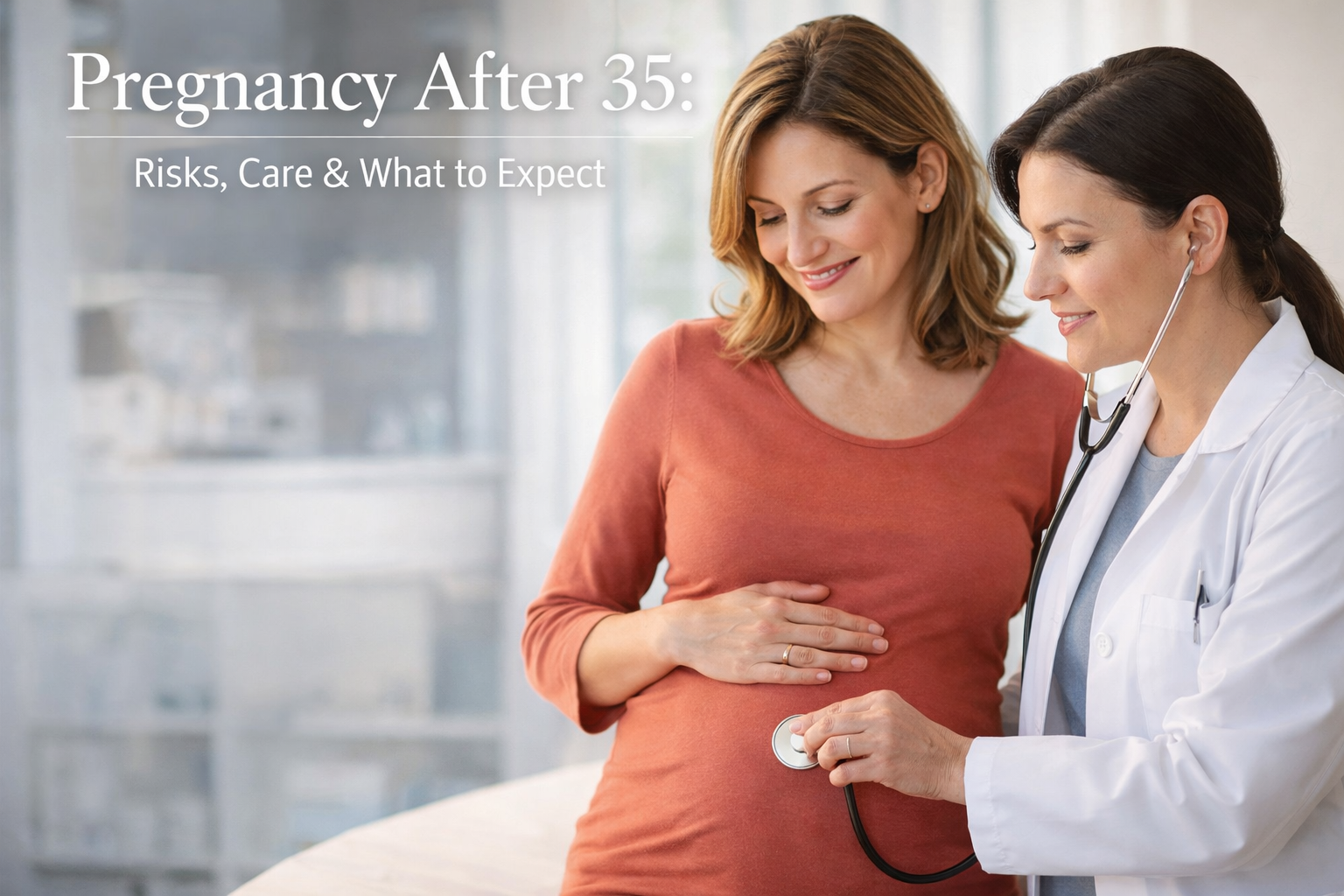
Pregnancy after 35 is sometimes referred to in clinical settings as “advanced maternal age” — a term that can feel jarring and reductive, especially for women who are healthy, well-prepared, and simply came to motherhood later in life. The medical designation exists because age is a relevant factor in pregnancy care and risk assessment. But it tells only part of the story, and it’s often communicated in ways that generate more anxiety than understanding.
The reality is that most pregnancies after 35 are healthy. Risks do increase with age — some more significantly than others — but for the majority of women in this age group, those risks remain manageable with appropriate prenatal care. What changes most significantly is the level of monitoring, screening, and shared decision-making that becomes part of the pregnancy journey.
This guide provides a research-informed overview of what pregnancy after 35 involves: what changes, what stays the same, what tests are typically recommended, and what the evidence shows about outcomes. It is not a substitute for care from a qualified OB/GYN or midwife — your individual health history, circumstances, and preferences are the most important guides to your pregnancy experience.
What Research Shows About Pregnancy Outcomes After 35
The research on pregnancy outcomes after 35 is nuanced. Some risks are meaningfully elevated; others are more modest than commonly assumed. Understanding the actual numbers — rather than relative risk language that can be misleading — is important context.
You Might Also Like
According to the American College of Obstetricians and Gynecologists (ACOG), the risks of certain chromosomal conditions, gestational complications, and pregnancy loss increase with maternal age. At the same time, the majority of women aged 35–40 who become pregnant have healthy pregnancies and deliver healthy babies. The key is understanding which risks apply to your individual situation and how to monitor and manage them proactively.
It’s also worth noting that research on pregnancy outcomes often cannot fully separate the effects of age from other factors — including socioeconomic status, access to prenatal care, pre-existing health conditions, and use of assisted reproductive technology — that differ systematically between older and younger mothers. This matters when interpreting statistics.
Chromosomal Considerations and Genetic Testing
One of the most significant and well-established effects of maternal age on pregnancy is the increased risk of chromosomal conditions, particularly trisomies (where there are three copies of a chromosome instead of two). The most common is trisomy 21, which causes Down syndrome.
Understanding the Numbers
At age 35, the risk of Down syndrome is approximately 1 in 350 live births. By age 40, it rises to approximately 1 in 100, and by 45, approximately 1 in 30. These numbers represent real increases in relative terms — but for many women, they also represent predominantly low absolute risk, particularly in the 35–38 age range. How you interpret and respond to these numbers is a personal decision that should be made with full information and, ideally, genetic counseling.
Prenatal Genetic Screening Options
Modern prenatal genetic screening has advanced considerably. The main options include:
Cell-free DNA (cfDNA) / Non-Invasive Prenatal Testing (NIPT): A blood test typically offered from 10 weeks onward that screens for common chromosomal conditions by analyzing fetal DNA circulating in maternal blood. It is highly sensitive for trisomies 21, 18, and 13. It is a screening test, not a diagnostic test — a positive result requires follow-up diagnostic testing.
First Trimester Combined Screening: Combines a nuchal translucency ultrasound (measuring fluid at the back of the baby’s neck) with bloodwork (PAPP-A and hCG). Less sensitive than cfDNA for trisomies, but provides additional information.
Diagnostic Testing (Chorionic Villus Sampling / Amniocentesis): These invasive tests examine actual fetal chromosomes and provide definitive diagnoses. They carry a small risk of pregnancy loss (estimated at less than 1% with experienced providers). They are typically offered to women who have abnormal screening results or who prefer diagnostic certainty.
Understanding your options for prenatal testing after 35 is an important part of early pregnancy planning. A detailed overview of these tests can help you prepare for the conversations you’ll have with your provider. See our article on prenatal testing after 35 for a thorough breakdown of each option.
Pregnancy Complications: Risk Context and Management
Several pregnancy complications are more common in women over 35. Understanding them is valuable — not to generate fear, but to support informed conversations with your care team.
Gestational Diabetes
Gestational diabetes — elevated blood sugar during pregnancy — is more common in women over 35. Risk is also elevated by pre-existing insulin resistance, higher body weight, family history of diabetes, and certain ethnic backgrounds. Most women are screened for gestational diabetes between 24 and 28 weeks. When diagnosed, gestational diabetes is typically managed through dietary changes and monitoring, and in some cases medication. With proper management, outcomes for both mother and baby are generally excellent. A deeper look at gestational diabetes after 35 covers what screening involves and what management typically looks like.
Hypertensive Disorders (Including Preeclampsia)
High blood pressure in pregnancy — including gestational hypertension and preeclampsia — is more common in older mothers. Preeclampsia involves high blood pressure combined with organ involvement (typically protein in urine or liver/kidney abnormalities) and requires close monitoring. Most cases are mild and manageable, though severe preeclampsia requires more intensive intervention. Women over 35 are typically monitored more closely for blood pressure throughout pregnancy. Low-dose aspirin is sometimes recommended for women with elevated preeclampsia risk — whether this applies to you is a conversation for your care provider.
Placenta Previa and Other Placental Issues
Placenta previa — where the placenta partially or fully covers the cervix — is somewhat more common with age and in women who have had prior uterine surgeries (including C-sections). Most cases of low-lying placenta detected in early ultrasounds resolve as the uterus grows. Placental abruption (premature separation of the placenta from the uterine wall) is also associated with older maternal age. These are conditions your care team will monitor for through routine ultrasound and symptom awareness.
Cesarean Section Rates
Cesarean section rates are higher in women over 35, related to a combination of factors including higher rates of complications, induction of labor, and clinician practice patterns. Whether this represents the best approach for individual women is a nuanced question — one worth discussing with your OB/GYN in the context of your specific pregnancy. Having an informed conversation about your preferences regarding labor and delivery is a meaningful part of birth planning at any age.
The First Trimester After 35
The first trimester is often the most emotionally complex period of pregnancy after 35, combining excitement with heightened awareness of risks — particularly miscarriage risk, which does increase with age. Pregnancy loss before 12 weeks occurs in approximately 15–25% of recognized pregnancies overall, rising to approximately 20–35% in women aged 35–40 and higher thereafter. Chromosomal abnormalities are the most common cause of early pregnancy loss.
This reality can make the first trimester feel cautious, guarded, and emotionally exhausting. Many women over 35 describe a tension between wanting to feel excited and feeling unable to fully do so until early screening results are reassuring. This experience is common and valid. There is no right way to navigate the emotional terrain of early pregnancy — working with a therapist or counselor who has experience with pregnancy-related anxiety can be genuinely helpful if this becomes difficult to manage alone.
Understanding what to expect in the first trimester after 35 — from the physical to the emotional — can help normalize what many women experience during this period.
Prenatal Care After 35: What’s Different
The core of prenatal care — regular appointments, blood pressure monitoring, fetal growth assessment, and nutritional guidance — is similar regardless of age. What differs after 35 is typically the frequency of monitoring and the range of testing offered.
More Frequent Monitoring in the Third Trimester
Many OB/GYNs recommend more frequent appointments and fetal monitoring (non-stress tests, biophysical profiles) in the third trimester for women over 35, particularly from 36–40 weeks onward. This is based on research suggesting slightly higher rates of stillbirth in older mothers at very late gestational ages. The management of timing of delivery — including discussions about elective induction — is an area of active research and some variation in clinical practice. Understanding your provider’s approach and asking about the evidence behind their recommendations is reasonable and encouraged.
Nutrition and Supplementation
Nutritional needs during pregnancy after 35 are similar to those at younger ages. Folate (from both dietary sources and supplementation), iron, calcium, vitamin D, and omega-3 fatty acids are all relevant. Pre-existing nutritional deficiencies — which are assessed through routine bloodwork — may require specific attention. Your care provider can guide supplementation based on your individual test results and dietary patterns rather than a generic approach.
Mental Health During Pregnancy After 35
Mental health is an underserved dimension of prenatal care at all ages, but can be particularly complex for women who become pregnant after 35. Anxiety about genetic testing results, miscarriage, and complications can be significant. Women who used assisted reproductive technology may carry additional emotional complexity from that journey. Those who experienced prior pregnancy loss may navigate heightened vigilance and grief alongside the current pregnancy.
Perinatal mood and anxiety disorders (PMADs) — including prenatal anxiety and depression — are common and treatable. Research suggests that up to 20% of pregnant women experience depression or anxiety during pregnancy. These conditions are not signs of weakness or poor coping, and they do not go unnoticed by most ob/gyns who ask about them routinely. If you’re experiencing persistent anxiety, low mood, panic, or difficulty functioning, raising this with your care team is important. Therapy, support groups, and in some cases medication can all be appropriate interventions. More about mental health during pregnancy after 35 is available for those navigating these challenges.
When to Contact Your Care Provider
Regardless of age, there are specific symptoms in pregnancy that should prompt prompt contact with a healthcare provider. These include:
- Any vaginal bleeding, particularly in the second or third trimester
- Sudden or severe swelling, particularly of the face and hands
- Severe or persistent headaches
- Vision changes, including blurred vision or seeing spots
- Severe abdominal pain or cramping
- Decreased fetal movement after 28 weeks
- Signs of preterm labor (contractions before 37 weeks, low back pain, pelvic pressure)
- Fever above 38°C / 100.4°F
- Difficulty breathing or chest pain
If you are ever uncertain whether a symptom warrants attention, contacting your provider is always appropriate. The general principle in pregnancy is: when in doubt, check it out.
💊 Related Product Guide
For a research-informed look at prenatal supplement options, our guide to prenatal vitamins after 35 covers what current evidence supports for folate, iron, vitamin D, and DHA — with context on what to look for when choosing a supplement.
Frequently Asked Questions
Is pregnancy after 35 considered high risk?
“Advanced maternal age” is a clinical classification that prompts additional monitoring — it doesn’t automatically make a pregnancy high risk in a clinical sense. Many women over 35 have straightforward, healthy pregnancies. Whether a pregnancy is considered formally high risk depends on individual factors including pre-existing conditions, pregnancy complications, and findings during prenatal care. Discussing your specific risk profile with your OB/GYN provides much more relevant information than age alone.
What prenatal tests are recommended after 35?
ACOG guidelines recommend offering all pregnant women, regardless of age, access to chromosomal screening and diagnostic testing. After 35, non-invasive prenatal testing (NIPT) is frequently offered early in pregnancy given its high sensitivity for trisomies. Anatomical ultrasound at 18–20 weeks, glucose tolerance testing at 24–28 weeks, and more frequent third-trimester monitoring are also commonly recommended. Your care team will outline a personalized plan based on your health history.
Does pregnancy affect the body differently after 35?
Physically, pregnancy at 35+ is similar in most respects to pregnancy at younger ages. Some women notice that recovery from the physical demands of pregnancy and childbirth feels slightly different, and fatigue may be more pronounced. Pre-existing conditions (back issues, joint concerns, etc.) that are more common with age can affect comfort during pregnancy. Overall, the fundamentals of pregnancy physiology don’t change dramatically between the mid-30s and early 40s.
Is miscarriage risk much higher after 35?
Miscarriage risk does increase with age, largely due to higher rates of chromosomal abnormalities in eggs and embryos. At 35–40, the risk of pregnancy loss is estimated at approximately 20–25% of recognized pregnancies, compared with around 15% in women in their 20s. The majority of pregnancy losses in this age group are due to chromosomal issues rather than anything the mother did or didn’t do. For women who experience recurrent pregnancy loss, a thorough evaluation with a reproductive specialist is recommended.
Can I have a natural birth after 35?
Yes — many women over 35 have vaginal deliveries, including unmedicated births, without complications. Cesarean section rates are higher in this age group but are influenced by a range of factors, many of which are modifiable. Discussing your preferences and birth plan with your care team early in pregnancy is a good practice. Being informed about when and why interventions might be recommended helps you participate actively in decisions about your care.
How does pregnancy after 35 affect mental health?
Pregnancy at any age can affect mental health, and after 35, specific concerns — about chromosomal testing results, complications, and managing anxiety about risk — can add complexity. Perinatal anxiety and depression are common and affect women of all ages and backgrounds. If you’re experiencing significant anxiety or mood changes during pregnancy, discussing this with your care team is important. Effective support is available, and addressing mental health during pregnancy is associated with better outcomes for both mother and baby.
Key Takeaways
- Most pregnancies after 35 are healthy. Age increases certain risks — particularly chromosomal conditions and some gestational complications — but these are manageable with appropriate prenatal care and monitoring.
- Prenatal genetic screening options, including NIPT and first-trimester combined screening, are widely available and highly informative for women over 35. Diagnostic testing (CVS or amniocentesis) provides definitive chromosomal results for those who want certainty.
- Gestational diabetes, hypertensive disorders, and higher cesarean rates are the most clinically significant age-related risks in pregnancy after 35 — all of which benefit from early identification and proactive management.
- Mental health during pregnancy — including anxiety about testing results and complications — deserves the same attention as physical health. Prenatal mood and anxiety disorders are common and treatable.
- The most important guide to your pregnancy after 35 is a knowledgeable, communicative care team who understands your individual history and preferences. Informed, engaged participation in your care makes a meaningful difference.
Medical Disclaimer
This content is for informational purposes only and does not constitute medical advice. Individual health situations vary significantly. Always consult a qualified healthcare provider before making decisions related to your health, fertility, or pregnancy.
About the Author
Emily Carter is a women’s health writer focused on fertility, pregnancy after 35, and sleep changes in midlife. She writes research-informed, non-alarmist content to help women navigate reproductive and hormonal transitions with clarity and confidence.
16 comentários em “Pregnancy After 35: Risks, Care, and What to Expect”