
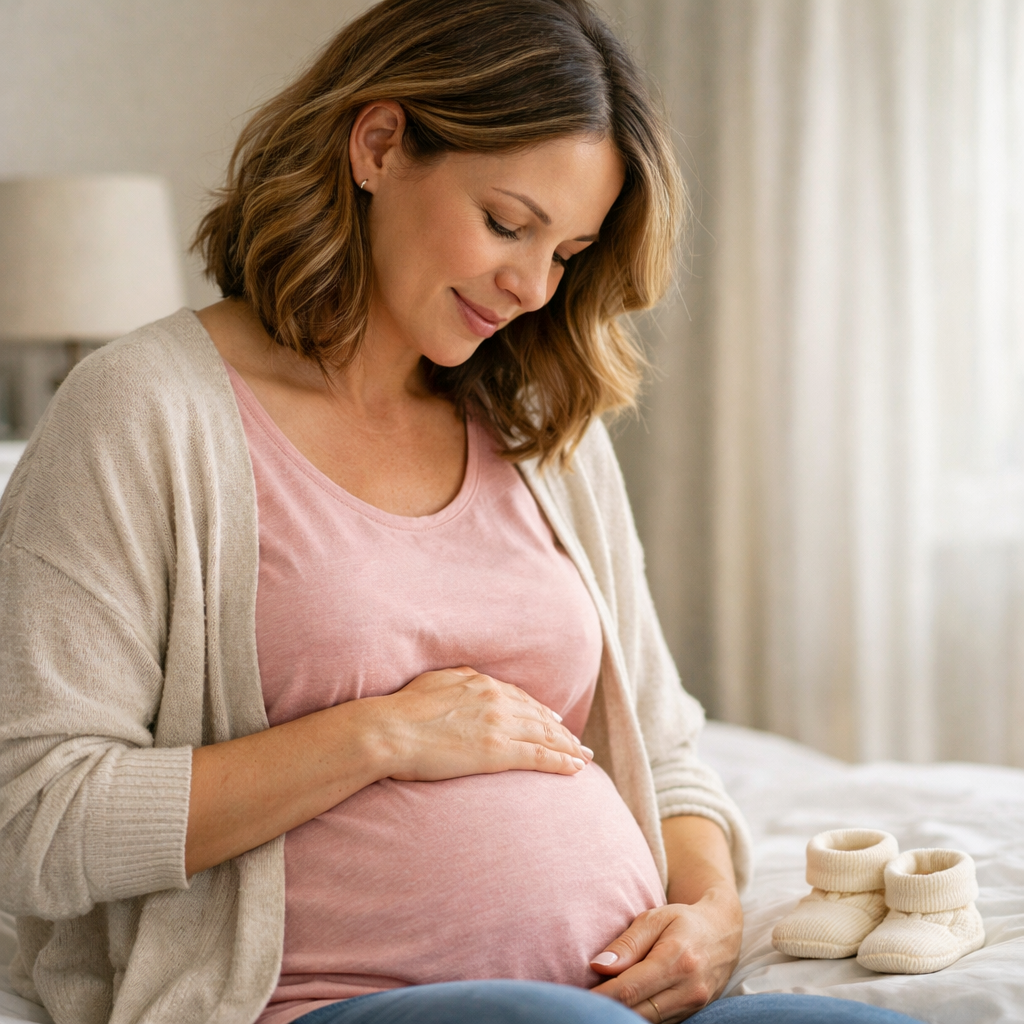
Why early pregnancy may feel different after 35
The body changes significantly between the ages of 25 and 35. Baseline energy levels, hormonal rhythms, sleep patterns, and recovery capacity are all naturally different. When pregnancy begins, it introduces a new hormonal environment on top of these existing changes.
For many women, this means that early pregnancy symptoms may feel more pronounced, appear earlier, or require more time to adapt to. This is not a sign that something is wrong — it often simply reflects the fact that the body is doing more work to accommodate a new reality.
Common physical changes in the early weeks
Fatigue that feels different from tiredness
Fatigue in early pregnancy is one of the most universally reported experiences. After 35, many women describe it as a kind of heaviness that does not resolve with a nap or a quiet evening. This happens because the body is working intensively to establish the pregnancy and support the developing embryo.
Breast changes and sensitivity
Breast tenderness is common in early pregnancy and often appears before many other symptoms. After 35, breasts may already respond more sensitively to hormonal fluctuations across the menstrual cycle, so this experience can feel amplified.
Nausea and changes in appetite
Nausea is frequently associated with early pregnancy. It does not always present as vomiting and can manifest as a general discomfort, sensitivity to smells, or loss of appetite. Its intensity varies widely and is not necessarily related to how the pregnancy is progressing.
Changes in the digestive system
Many women notice changes in digestion during early pregnancy — including bloating, constipation, or a feeling of fullness. These are largely driven by progesterone, which slows digestion to allow for better absorption of nutrients.
Light spotting or mild cramping
Some women experience light spotting or mild pelvic cramping in early pregnancy, which can be alarming if unexpected. In many cases, this is related to implantation or normal adjustments of the uterus. Any spotting or cramping should be discussed with a healthcare provider to rule out other causes.
Frequent urination
The kidneys begin processing more fluid early in pregnancy. For some women, the need to urinate more frequently appears before other symptoms are even noticeable.
Heightened sensitivity to smells
Many women report a sudden and heightened sensitivity to smells in early pregnancy. Foods, environments, or fragrances that were previously neutral may become difficult to tolerate.
Physical patterns specific to pregnancy after 35
While the symptoms above are common across all ages, some patterns appear more frequently after 35. The body may take longer to adjust in the first weeks, particularly for women who were already managing high physical or emotional loads before pregnancy. Sleep may be more disrupted. Physical recovery between demanding days may feel slower. These are natural aspects of how the body’s resources are being redirected toward the pregnancy.
Emotional responses to physical changes
It is common for physical changes to bring emotional responses — sometimes unexpected ones. Relief, fear, overwhelm, or disbelief can all appear during the same week. Physical discomfort — especially fatigue and nausea — may also influence mood, concentration, and energy for activities that normally feel manageable. Recognizing this connection can help reduce self-judgment during a demanding period.
When to contact a healthcare provider
Some physical changes in early pregnancy warrant prompt medical attention: heavy bleeding (more than light spotting), severe abdominal pain, signs of infection, or a complete absence of pregnancy symptoms after they were previously present. If something feels significantly different or concerning, reaching out to a qualified provider is always the right choice.
FAQ — Frequently asked questions
1. Is it normal to feel more fatigued in early pregnancy after 35?
Yes. Fatigue is one of the most common early pregnancy symptoms, and many women over 35 report it feeling more intense or longer-lasting.
2. Why do breasts feel so tender in early pregnancy?
Breast changes are driven by rising progesterone and estrogen levels, which begin preparing breast tissue early in pregnancy.
3. Is nausea always a sign of a healthy pregnancy?
Nausea is common but not universal. Its presence or absence does not reliably indicate how the pregnancy is progressing.
4. Is spotting in early pregnancy always dangerous?
Not always, but it should always be assessed by a healthcare provider to determine its cause.
5. Can digestion change this early in pregnancy?
Yes. Hormonal changes, particularly elevated progesterone, slow the digestive system and can cause bloating, constipation, or fullness.
6. Is it normal to have mood changes alongside physical symptoms?
Yes. Physical discomfort and hormonal changes can directly influence emotional states, especially in the first trimester.
7. Should every symptom be the same as in a previous pregnancy?
No. Each pregnancy is different, and the body’s experience can vary significantly between pregnancies — even for the same person.
8. When do early pregnancy symptoms typically start?
Most women notice early symptoms between weeks 4 and 6 of pregnancy, though this varies widely.
Key takeaways
- Early pregnancy after 35 often brings recognizable symptoms that may feel more pronounced than expected
- Fatigue, nausea, breast changes, and digestive shifts are common and largely driven by hormonal changes
- Physical changes can affect mood and emotional well-being in significant ways
- Any concerning symptoms — especially heavy bleeding or severe pain — should be evaluated by a healthcare provider
- Each pregnancy is a unique experience, and there is no single “normal” for how early pregnancy should feel
Related Reading: Emotions in Early Pregnancy After 35 | Pregnancy After 35: What to Watch for at Each Stage
Medical disclaimer: This content is for informational and educational purposes only and does not replace professional medical advice, diagnosis, or treatment. If you have questions or concerns about your pregnancy, always consult a qualified healthcare professional.
Why Symptoms May Feel More Intense After 35
Research suggests that women who conceive after 35 may experience pregnancy symptoms more intensely, particularly fatigue and nausea. This is partly because the body’s hormonal response to pregnancy â especially the sharp rise in hCG and progesterone in the first trimester â remains robust even as overall hormone production has changed with age.
It is also common to feel more physically aware of what is happening. Many women who have spent years trying to conceive, or who have a stronger baseline awareness of their bodies, notice and track changes more carefully. This heightened attention is not anxiety â it is the natural result of paying close attention to something you have been hoping for.
Medical Disclaimer
This content is for informational purposes only and does not constitute medical advice. Individual health situations vary significantly. Always consult a qualified healthcare provider before making decisions related to your health, fertility, or pregnancy.
About the Author
Emily Carter is a women’s health writer focused on fertility, pregnancy after 35, and sleep changes in midlife. She writes research-informed, non-alarmist content to help women navigate reproductive and hormonal transitions with clarity and confidence.
1 comentário em “Physical Changes in Early Pregnancy After 35: What Many Women Notice”
Os comentários estão encerrado.