
Introduction
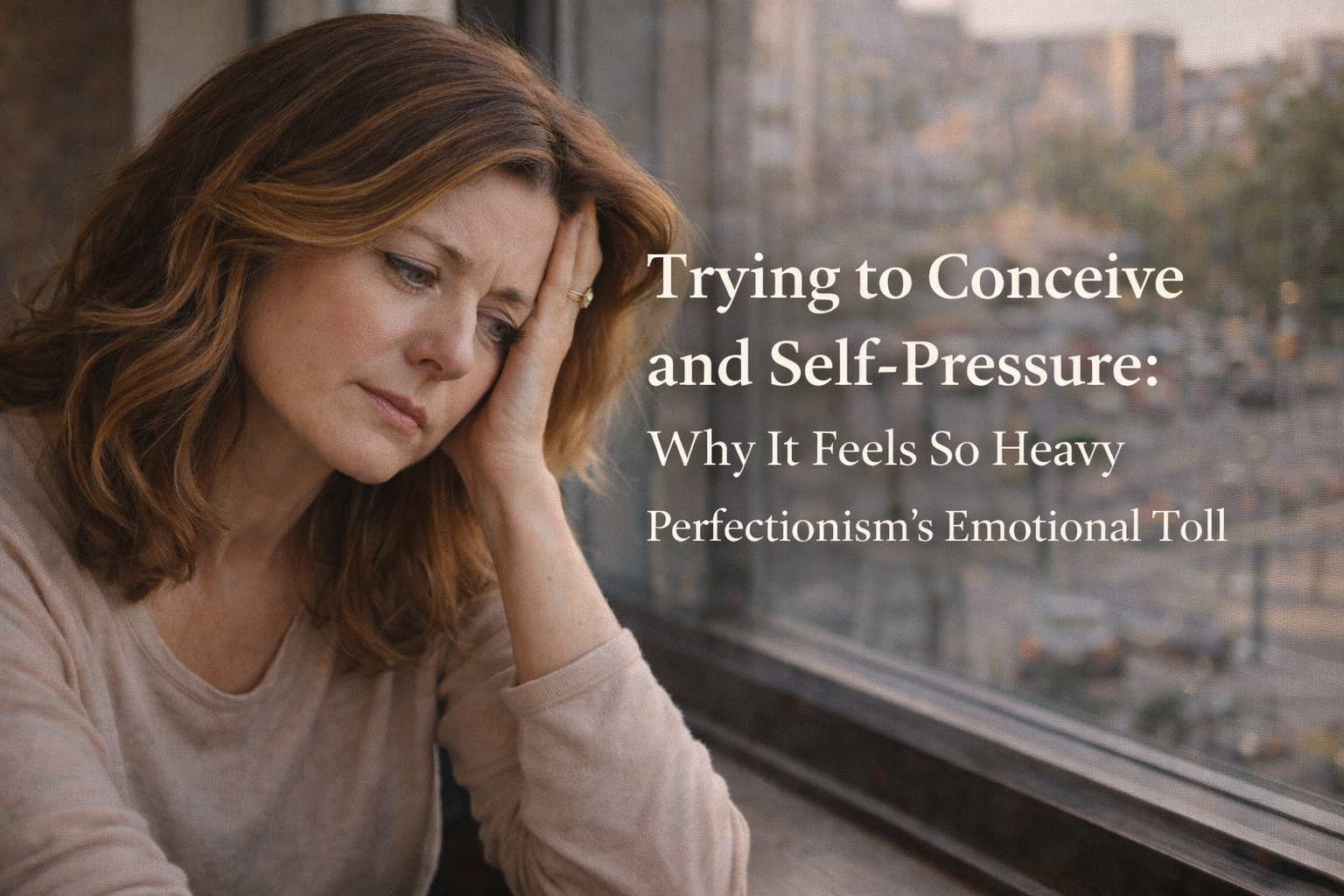
For many women, trying to conceive involves much more than physical timing or biological awareness. Alongside ovulation tracking, cycle awareness, and hopeful planning, there is often a quieter companion: self-pressure.
Thoughts such as “Am I doing everything right?”, “Why hasn’t it happened yet?”, or “What else should I be controlling?” may surface month after month. While these questions often remain internal, their emotional weight can feel constant.
Importantly, this self-pressure does not appear by chance. In most cases, it grows from a life shaped by responsibility, planning, and high personal standards. Therefore, understanding why self-pressure emerges during the trying-to-conceive journey is an essential step toward easing its emotional impact.
Why Self-Pressure Often Appears When Trying to Conceive
Throughout adulthood, many women learn that effort, discipline, and consistency lead to results. In careers, education, and personal development, this pattern often proves true. Consequently, planning and control become reliable tools for progress.
However, trying to conceive follows a very different logic.
While preparation and awareness matter, pregnancy does not respond predictably to effort alone. The body follows its own rhythm, and outcomes cannot be fully managed. As a result, when desire meets uncertainty, self-pressure tends to increase.
After the age of 35, this pressure may feel even stronger for several reasons:
- There is often a heightened awareness of time
- Past experiences may reinforce a belief in “doing everything right”
- Accepting biological unpredictability can feel uncomfortable
- Comparisons with other women’s timelines become more frequent
- There may be a silent feeling that failure is not an option
In this context, self-pressure often becomes an attempt to regain a sense of control in a process that resists it.
How Self-Pressure Commonly Manifests
Self-pressure during the trying-to-conceive phase does not always appear dramatically. Instead, it often shows up in subtle, repetitive patterns that slowly accumulate emotional weight.
For example, many women notice:
- Constant review of habits, routines, and decisions
- Guilt when something feels “off plan”
- Repetitive thoughts about what could be done differently
- Difficulty relaxing or allowing rest
- Self-criticism after each cycle without pregnancy
- A sense of being personally responsible for the outcome
Although these reactions are exhausting, they are also understandable. Especially for women accustomed to high performance in other areas of life, letting go of control can feel unfamiliar and unsafe.
The Role of Perfectionism in This Process
Perfectionism is often socially rewarded. Being organized, disciplined, and detail-oriented is frequently praised. However, in emotionally uncertain processes, perfectionism can quietly turn into emotional strain.
When trying to conceive, the belief that one must “do everything right” in order to deserve a result can create constant internal pressure. Unfortunately, biology does not follow checklists.
Ovulation does not align perfectly every month. Timing is not always predictable. And outcomes do not always reflect effort. Consequently, perfectionism may lead to frustration rather than reassurance.
Over time, this mismatch between effort and outcome can intensify self-pressure, especially when expectations remain rigid.
Factors That May Intensify Self-Pressure
Several emotional and social factors tend to increase self-pressure during this phase. Often, they act together rather than in isolation.
A history of high achievement
Women who have consistently relied on discipline and planning may struggle most with uncertainty.
Comparison
Stories of quick pregnancies — often shared without full context — can reinforce feelings of inadequacy.
Emotional silence
When the process is lived quietly, without space for honest conversation, pressure tends to build internally.
Social expectations
Subtle messages about age, timing, and motherhood can deepen internal demands.
Intense desire
The stronger the wish to conceive, the heavier the emotional responsibility may feel.
Recognizing these influences helps shift the narrative from self-blame to self-awareness.
Why Self-Pressure Does Not Mean You Are Doing Something Wrong
It is important to say this clearly: feeling self-pressure does not mean you are failing. It does not mean you are emotionally unprepared, controlling, or “too anxious.”
In many cases, self-pressure reflects:
- Commitment
- Care
- Responsibility
- Emotional investment
These qualities are not flaws. However, when they are directed inward without compassion, they can become emotionally draining.
Understanding this distinction allows self-pressure to be seen not as a personal weakness, but as a signal that something deeply meaningful is at stake.
When Effort Meets Uncertainty
One of the most difficult aspects of trying to conceive is the clash between effort and uncertainty. In many adult experiences, effort produces results. Here, however, effort coexists with waiting.
As a result, the mind may attempt to fill the gap by monitoring, analyzing, and controlling as much as possible. While this response is natural, it can also increase emotional fatigue when clarity remains out of reach.
Learning to tolerate uncertainty — even partially — often reduces the intensity of self-pressure over time.
What Often Helps, in a General Sense
There are no quick fixes or universal solutions. However, certain attitudes tend to soften self-pressure and make the process more emotionally sustainable.
For instance:
- Acknowledging that pregnancy does not depend solely on effort
- Gently questioning rigid standards of perfection
- Allowing yourself not to have all the answers
- Reducing constant comparisons
- Seeking conversations that are realistic and supportive
While these approaches do not eliminate self-pressure entirely, they often prevent it from dominating emotional life.
When Self-Pressure May Need Support
There are moments when self-pressure becomes more than a background presence. Instead, it begins to shape daily thoughts, self-worth, and relationships.
Seeking support may be helpful when:
- Self-criticism feels constant and exhausting
- Thoughts about conceiving dominate most of the day
- Relaxation or enjoyment becomes difficult
- Self-esteem begins to suffer
- Relationships feel strained by internal pressure
In these situations, professional emotional support can help build a gentler relationship with oneself during this phase.
Frequently Asked Questions
Is it normal to feel intense self-pressure when trying to conceive?
Yes. Especially for women used to planning and responsibility, this feeling is common.
Does self-pressure help pregnancy happen faster?
Not necessarily. In many cases, it increases emotional strain rather than offering control.
Can perfectionism make this process harder emotionally?
Yes. Particularly when outcomes cannot be controlled directly.
Is guilt common when things don’t go as planned?
Yes. Many women report this, even when they have done nothing wrong.
Does emotional support help reduce self-pressure?
Often, yes. Supportive conversations can soften internal demands.
Final Summary
Trying to conceive often brings self-pressure alongside hope
This pressure usually comes from a desire for control and responsibility
Perfectionism can intensify emotional strain during this process
Pregnancy does not follow rigid rules or timelines
Understanding and self-compassion help ease the emotional weight
Optimized Internal Links (Suggested Anchors)
- Pillar: Trying to conceive after 35: what to observe
- Related: Anxiety when trying to conceive: why it appears
- Related: How to cope with waiting while trying to conceive
Disclaimer
This content is informational and reflective. It does not replace medical, psychological, or professional guidance. Each emotional experience is unique, and seeking support is a valid form of self-care.
Related Reading: Guilt About Trying Later in Life | Biological Clock Pressure
Sources: Mayo Clinic – Female Fertility: Why Lifestyle Choices Count
Key Takeaways
- Individual experiences vary considerably — what one person notices may differ significantly from another’s.
- Research in this area continues to evolve; current evidence provides useful context without definitive answers for every situation.
- Consulting a qualified healthcare provider is the most reliable way to understand what applies to your specific circumstances.
Medical Disclaimer
This content is for informational purposes only and does not constitute medical advice. Individual health situations vary significantly. Always consult a qualified healthcare provider before making decisions related to your health, fertility, or pregnancy.
About the Author
Emily Carter is a women’s health writer focused on fertility, pregnancy after 35, and sleep changes in midlife. She writes research-informed, non-alarmist content to help women navigate reproductive and hormonal transitions with clarity and confidence.
2 comentários em “Trying to Conceive and Self-Pressure: Why It Feels So Heavy”
Os comentários estão encerrado.